


Historians, educators, and politicians have carefully curated what goes into our history books for generations. Contributions by African Americans and other minorities are too often among the first things deemed nonessential. It’s easier to tell children about brave Europeans who sailed across the ocean to create a society where they could worship freely than it is to explain hundreds of years of slavery, Jim Crow laws, or gerrymandering.
Recent efforts to label the achievements of African Americans as DEI further threaten to whitewash our history. Every day we use products invented by Black Americans. Many of us are alive today thanks to some of these innovations.
If you’ve ever received chemotherapy, had cataract surgery, or needed blood, innovations by African American doctors and researchers played a part in your treatment. If you’ve ever stopped at a traffic light based on the placement and color of the lights, or if you’ve ridden in an elevator with automatic doors, thank an African American.
During Black History Month. I can’t think of a better way to celebrate than to feature Black scientists and inventors you should know and list some of their accomplishments. This is only a small percentage of the talented African Americans who have improved our daily lives with their clever innovations. Remember Black History is a part of American History. It should be included in our history books, and the achievements of Black Americans must not be forgotten.
Thomas L. Jennings (1791-1856) is believed to be the first African American to receive a U.S. patent. His dry scouring method was a precursor for the dry-cleaning process used today. Jennings opened a tailor’s shop and dry cleaners. He used the profits from his business to buy the freedom of his enslaved wife and children.
Garrett Morgan (1877-1963) was an African American inventor, community leader, and businessman. After a tunnel construction disaster in 1916, he developed a protective smoke hood that allowed firefighters to breathe fresh air as they battled fires. It could also be used by the military as a gas mask. In 1923 he invented a type of three-way traffic signal that became the precursor to the modern traffic light. He also invented hair products for Africa Americans.
Alice Ball (1892-1916) was a chemist. She developed an injectable treatment for leprosy.
Marie Daly (1921-2003) was a chemist. She researched the relationship between cholesterol and heart health.
Andrew J. Beard (1849 -1921) was born into slavery. He was emancipated at 15 and became an important inventor. He’s credited with inventing a flour mill and several plows. His most important work was in railroad safety. Beard improved the Janney coupler invented by Eli Janney. The Janney coupler was used to hook railroad cars together, but this had to be done by hand. It was dangerous. Beard lost a leg in a coupling accident. His improved device made it possible for the cars to link together automatically preventing accidents and saving lives of railway workers. He also invented the Beard Rotary Steam Engine which has no dead center and can be started from whatever position it stopped in. After Beard’s health failed, he died in poverty.
Dr. Charles Richard Drew (1904-1950) was a surgeon and medical researcher who specialized in the field of blood transfusions. Dr. Drew developed ways to use and preserve plasma blood. His research saved lives during World War II and led to the model used by blood banks. He’s credited with the first bloodmobile, a specialized vehicle equipped as a mobile donation center. Bloodmobiles bring blood-drives directly to communities, workplaces, and schools. Dr. Drew protested the practice of racial segregation in the donation of blood because it lacked scientific foundation. He became the first Africa American surgeon selected to serve as an examiner on the American Board of Surgery.
Dr. Jane Cooke Wright (1919 -2013) was born into a family of doctors. Her paternal grandfather, Dr. Ceah Ketcham Wright was born into slavery. After being emancipated, he graduated medical school. He died when his son, Louis, was four years old.
Louis Wright’s stepfather was William Fletcher Penn, the first African American to graduate from Yale Medical School. Louis became one of the first African Americans to graduate from Harvard Medical School and the first African American doctor at a public hospital in New York City. Dr. Louis Wright founded and directed the Harlem Hospital Cancer Research Center. His brother-in-law, Dr. Harold Dadford West, was the president of Meharry Medical College, a private historically black medical school in Nashville, Tennessee. It seemed only natural that Dr. Wright’s daughter Jane would also go into medicine.
After graduating from Smith College with an art degree. Jane Cooke Wright received a scholarship to attend the New York Medical College. She graduated at the top of her class in 1945 after completing an accelerated three-year program.
After completing residencies at Bellevue Hospital and Harlem Hospital, she joined her father in research at the Harlem Hospital Cancer Research Center in 1949. She and her father became interested in chemotherapeutic agents. They wanted to make chemotherapy more accessible for everyone. During the 1940s, chemotherapy was still considered an experimental drug, and it was only used as a drug of last resort. The drugs and their dosages were not well defined.
Dr. Wright and her father advocated for chemotherapy’s use as a “front-line” drug in the battle against cancer.
They were among the first researchers to report the use of nitrogen mustard agents and folic acid antagonists as cancer treatments to stop mitosis from happening in cancer cells. The folic acid antagonists proved to be highly effective against a vast array of solid cancers including breast cancer, Hodgkin’s disease, melanoma, lymphosarcoma, prostate cancer, and several forms of leukemia.
Methotrexate, which formed the basis for all modern chemotherapy, is still used today to treat a variety of cancers.
She succeeded her father as director of the Harlem Hospital Cancer Research Center after his death in 1952.
Dr Wright’s work was the steppingstone for combination therapy and individual adjustment made to dosages based on patient toxicity. In combination therapies, a chemotherapy drug which attacks cells as they divide is paired with a chemotherapy drug that attacks cells at rest. Monoclonal antibodies may also be used to target certain types of cancers.
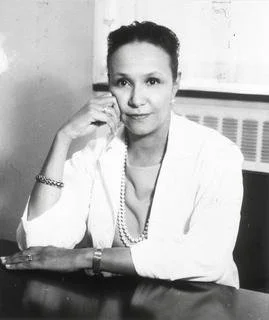
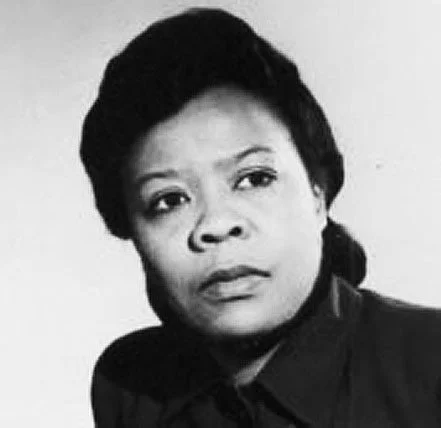
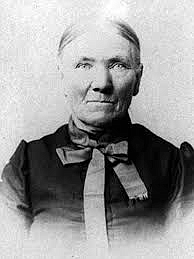
Alice H. Parker was born in Morristown, New Jersey in 1895. She graduated with honors from Howard University in 1910. The ineffectiveness of her fireplace during cold New Jersey winters while growing up is believed to have been her inspiration for inventing a better heating system. Instead of wood or coal, Parker created what is now a central heating system powered by natural gas. Parker received a patent for her invention in 1919 years before the Civil Rights Movement or the Women’s Liberation Movement. Safety concerns about regulating heat flow kept her invention from being implemented. It was a precursor to modern heating systems, and safety modifications to her idea inspired and led the way to features such as thermostats, zone heating, and forced air furnaces. Gas proved to be more efficient for heating homes than wood or coal. In 2019, the National Society of Black Physicists honored Parker as an "African American inventor famous for her patented system of central heating using natural gas."
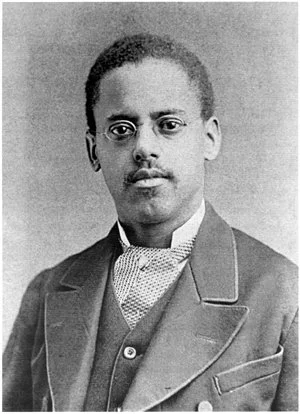
Lewis Howard Latimer was born in 1848 to escaped slaves living in Massachusetts. At 15, he enlisted in the U.S. Navy and was honorably discharged two years later. He became an office boy at a patent lawyer’s office. Latimer learned drafting and his abilities impressed his employers who promoted him to head draftsman.
In 1874, Latimer co-patented with Charles M. Brown an improved toilet system for railroad cars called the Water Closet for Railroad Cars.
In 1876, Latimer was employed at Alexander Graham Bell’s patent law firm where he drafted the necessary drawings to receive a patent for Bell's telephone.
After moving to Bridgeport, Connecticut in 1879, he was hired as assistant manager and draftsman for Hiram Maxim’s U.S. Electric Lighting Company. Maxim was a rival of Thomas Edison. While there, Latimer invented a modification to the process for making carbon filaments to help reduce breakages during the carbonization process. Maxim sent him to Europe to teach the process for making Maxim Lights and glass blowing techniques. This enabled Maxim to get his new factory up and running in nine months.
In 1884, Latimer began working with Thomas Edison to collect technical data which he also translated into German and French.
Latimer developed a forerunner of the modern air conditioner which he called "Apparatus for cooling and disinfecting".
In 1894, Latimer applied for a patent on a safety elevator which helped prevent riders from falling out of the elevator car and into the shaft.
He was the first person of color to be invited to join the Edison Pioneers Group of 100.
Benjamin Banneker (1731-1806) was an astronomer and mathematician. He used scientific data to predict the 1789 solar eclipse. He was also one of the surveyors who helped map out the territory for Washington D.C.
Alexander Miles (1838-1918) Mile’s daughter Grace was seriously injured when she accidentally fell down an elevator shaft. Before Mile’s invention, elevator doors had to be closed manually by dedicated operators. If the shaft weren’t closed, people could easily fall through it resulting in serious injury or death. Miles designed a flexible belt attachment to the elevator cage and drums positioned to indicate if the elevator had reached a floor. The belt allowed the doors to automatically open and close when the elevator reached the drums on respective floors, by means of levers and pulleys.
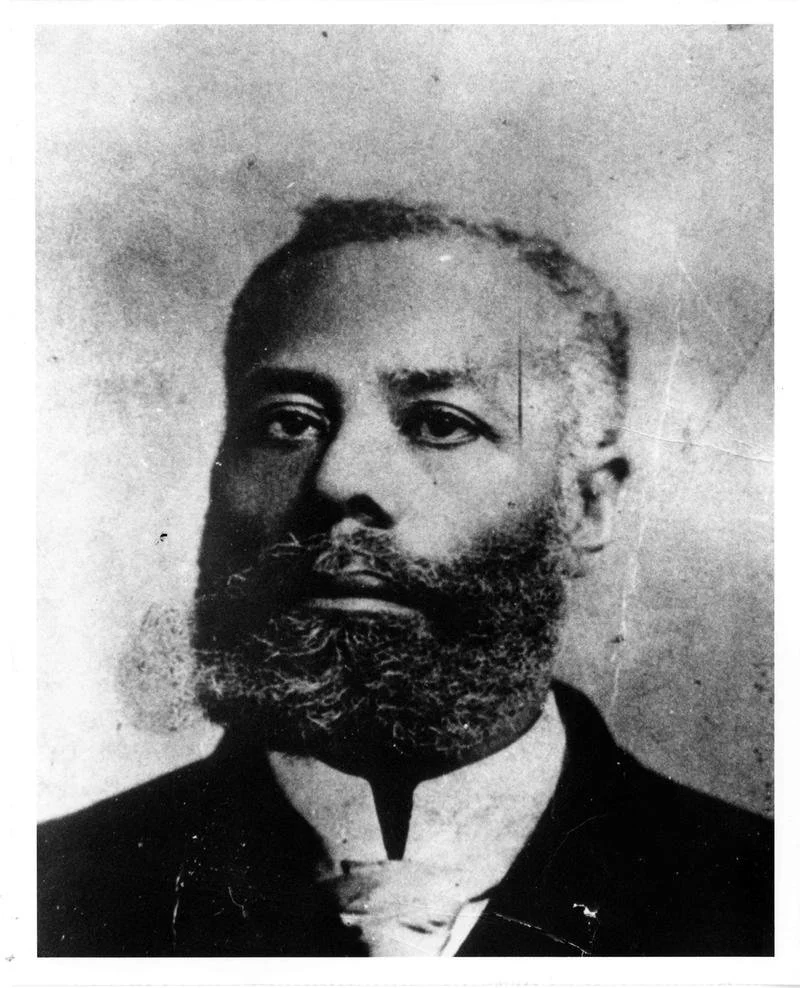
Elijah McCoy was born free in Canada in1844 to escaped slaves who via helpers made it through the Underground Railroad from Kentucky to Ontario. McCoy attended a segregated “Blacks only” school in Canada and at 15, he was sent on an apprenticeship to Edinburgh, Scotland to become a mechanical engineer. During his absence, his parents returned to the United States permanently and settled in Ypsilanti, Michigan. In Michigan, McCoy could only find work as a fireman or an oiler at the Michigan Central Railroad. In his home-based machine shop, McCoy did more complicated tasks and pursued his passion for inventing. In total he was awarded 57 patents for inventions. Most were related to lubrication systems for steam engines, but he also held patents for a folding ironing board and a lawn sprinkler.
George Washington Carver (1864-1943) was one of the most prominent black scientists of the twentieth century. His specialization was in agricultural science. Carver developed techniques to improve types of soils being depleted by the repetitive planting of cotton. He encouraged poor farmers to plant crops such as sweet potatoes or peanuts to enrich their soil and grow their own food. He published “How to Grow the Peanut and 105 Ways of Preparing it for Human Consumption,” however, he did not invent peanut butter. The Aztecs were known to have made peanut butter as early as the 15th century. Carver’s personal beliefs and his work proved that science and Christianity could co-exist to improve people’s.
Patricia Bath (1942-2019) was an ophthalmologist who developed laser technology used in treating cataracts.
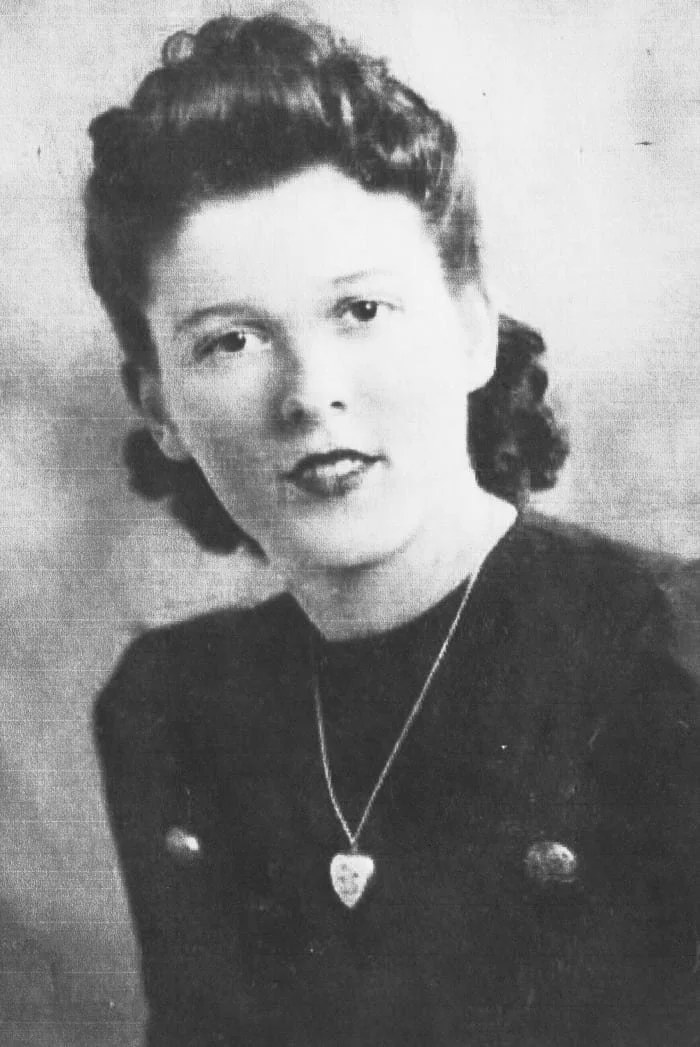
Marie Van Brittan Brown was born in 1922 in Queens, New York where she lived her entire life. Brown invented the first home security system, and she is credited with the invention of the first closed circuit television. Brown was a nurse. and her husband was an electronics technician. Their jobs did not follow a nine to five schedule which left their home vulnerable to intruders. Police response time was poor for her neighborhood, so Brown set out to develop her own security system. She was granted a patent in 1969, and components of her design are still incorporated into small business and home security systems.
Judy W. Reed (born in 1826) is believed to be the first African American woman to receive a U.S. patent. Reed received a patent in 1884 for a bread kneader and roller. Reed was born a slave, and it isn’t known if she could read or write. Her patent is signed only with an “X.” No other information about her life can be found.
Sarah E. Goode is the first African American woman to sign her name on a U.S. patent (1885). Goode was born into slavery in 1855 and was granted her freedom after the Civil War. Goode, who owned a furniture store, invented a folding cabinet bed which helped people who lived in tight housing utilize their space more efficiently. It worked particularly well in the tenements of New York where space was limited. The bed folded up into a desk with room for storage. Her design is the precursor to the Murphy bed which was patented in 1900.
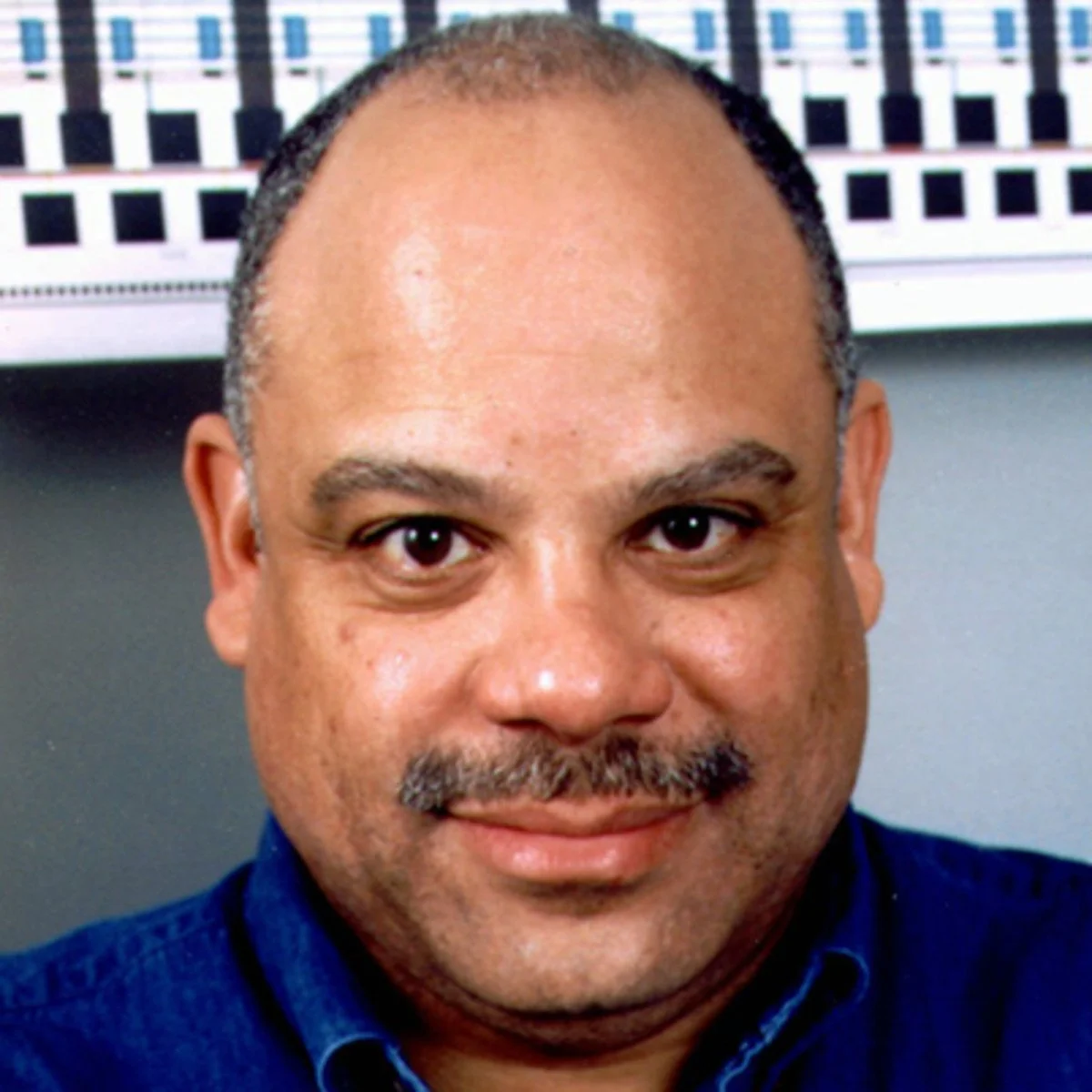
Mark E. Dean was born in Jefferson City, Tennessee in 1957. He was interested in how things worked at an early age. As a boy, he and his dad built a tractor from scratch. Dean is an inventor and computer engineer. He was part of the team that developed the ISA bus that enables multiple devices, such as modems and printers, to be connected to personal computers. Dean led a design team for making a one-gigahertz computer processor chip. He also holds three of nine PC patents for being the co-creator of the IBM personal computer released in 1981. Dean now holds more than 20 patents. He is the first African American to be recognized as an IBM Fellow, which is the highest level of technical excellence at the company. Dean was inducted into the National Inventors Hall of Fame in 1997.
George Robert Carruthers was born in Cincinnati, Ohio in 1939. He was an inventor, physicist, engineer, and space scientist. At an early age, he became interested in space travel, physics, science, and astronomy. He built a working telescope out of cardboard tubing and lenses he purchased with money he earned as a delivery boy when he was only ten years old.
He is credited as the inventor of the first far ultraviolet electronographic detector design able to operate in space as the heart of an ultraviolet camera/spectrograph. His work provided important answers to astronomers’ questions about what was then known as the "missing mass" problem.
In 1964, Carruthers was employed at the U.S. Naval Research Laboratory in Washington, D.C. His work focused on far ultraviolet astronomy. He received a patent in 1969 for his invention, the "Image Converter," which detected electromagnetic radiation in short wavelengths. In 1970, he made the first examination of molecular hydrogen in space.
In 1972, Carruthers developed the first moon-based observatory, the Far Ultraviolet Camera/Spectrograph. It was used in the Apollo 16 mission.
In 1986, one of his inventions captured an ultraviolet image of Halley's Comet, and in 1991, he developed a camera that was used in a Space Shuttle Mission.
Carruthers passed away in December 2020. During his lifetime he received numerous awards including:
Exceptional Achievement Scientific Award Medal NASA 1972
Black Engineer of the Year Award 1987
Inducted into the National Inventors' Hall of Fame, 2003
National Medal of Technology and Innovation, 2012
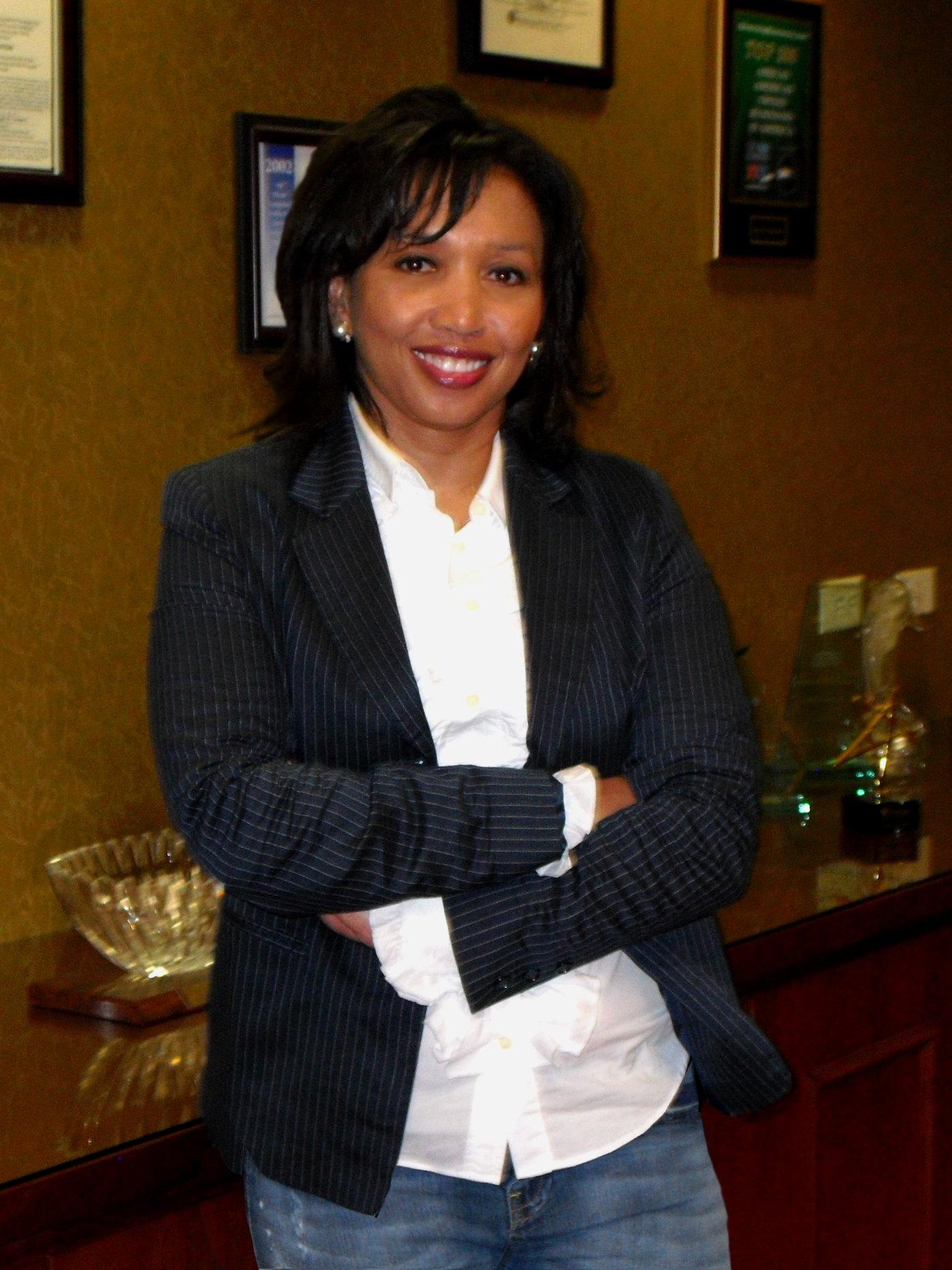
Janet Rita Emerson Bashen is a Software inventor, entrepreneur, business consultant, and social justice advocate. She was born in Mansfield, Ohio in 1957. Her family moved to Huntsville, Alabama where she attended segregated schools until the fifth grade. Her father was a garbage collector until his retirement, and her mother was an LPN at Huntsville Hospital. She was the first Black nurse to work in the emergency room at the hospital.
After college, Bashen worked for an insurance company handling claims related to Equal Employment Opportunities. She quickly saw the need for a better system to investigate these claims using independent investigators. In 1994, she borrowed money from family and started the Bashen Corporation to investigate discrimination claims filed by employees. As her company grew, Bashen looked for better ways to store and quickly access data for claims. Working with her cousin, Donnie Moore, a Tufts University computer science graduate, Bashen worked to develop the software which became the genesis for the software LinkLine. In 2006, she became the first African American woman to earn a web-based software patent. Bashen is in the Black Inventors’ Hall of Fame and in 2012 she was named to Ebony Magazine’s Power 100 List of the most influential African Americans in entertainment, politics, sports, and business.
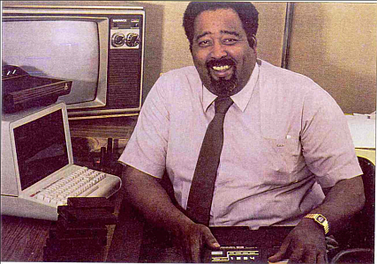
Jerry Lawson was known as the “Father of Modern Gaming.” He was born in 1940 in Brooklyn, New York. His father was a longshoreman and his mother worked for the city. Lawson’s grandfather had a degree in physics. He was never able to find work in his chosen field, so he became a postmaster. Lawson’s grandfather and father shared their interest in physics with him. Lawson was particularly interested in chemistry and ham radios.
Lawson went to work for Fairchild Semiconductor in San Francisco in 1970 as an applications engineering consultant in their sales division. He created the early arcade game Demolition Derby in his garage. Demolition Derby was among the earliest microprocessor-driven games. Lawson became the Chief Hardware Engineer and director of engineering and marketing for Fairchild's video game division. He headed the development team of the Fairchild Channel F console, which was released in 1976. It was specifically designed to use swappable game cartridges based on technology licensed from Alpex. The ability to safely use removable game cartridges created a new market for video gaming companies. Instead of selling a console with a set number of games in the system, consumers were now able to purchase games. Lawson also created an 8-way joystick and the pause button to temporarily stop game play.
Lawson and Ron Jones were the only black members of the Homebrew Computer Club, a group of early computer hobbyists that included industry legends, Steve Jobs and Steve Wozniak, the founders of Apple.
Lawson started his own video game development company, Videosoft, in 1980. Videosoft made games for the Atari 2600. Lawson was honored as an industry pioneer for his work on the game cartridge concept by the International Game Developers Association shortly before his death from complications caused by diabetes in 2011.
Photo credit for Alice H. Parker:
https://images.app.goo.gl/W4kTSrnnd2baCyZ1A - no copyright infringement is intended – photo is being used in an informational article for Black History Month
Photo for Lewis Howard Latimore is in the Public Domain
Photo credit for Elijah McCoy:
By Rights Held by: Ypsilanti Historical Society - Copyright: Creative Commons (Attribution, Non-Commercial, Share-alike), CC BY-SA 4.0, https://commons.wikimedia.org/w/index.php?curid=55717775
Photo credit for Mary Van Brittan Brown:
Taken from timeline.com - No copyright infringement is intended – photo is being used in an informational article for Black History Month
Photo for Judy W. Reed not available
Photo of Sarah E. Goode is in the Public Domain
Photo credit for Mark E. Dean:
Photo: AP Photo/IBM – no copyright infringement is intended – photo is being used in an informational article for Black History Month
Photo of George Robert Carruthers is in the Public Domain
Photo credit for Janet Emerson Bashen:
By Highlighter11 - Own work, CC BY-SA 3.0, https://commons.wikimedia.org/w/index.php?curid=14902342
Photo credit for Jerry Lawson:
By Source (WP:NFCC#4), Fair use, https://en.wikipedia.org/w/index.php?curid=53130879