




This month in “Dare to Believe” we are celebrating the courage of Mary Ann Shadd Cary, an American Canadian anti-slavery activist, journalist, publisher, teacher, and lawyer. Thaddeus Stevens was an American politician and lawyer who served as a member of the US House of Representatives from Pennsylvania during the 1860s.
Cary was the first black woman publisher in North America and the first woman publisher in Canada.
Stevens was a fierce opponent of slavery and discrimination against Black Americans. He fought to secure the rights of freedmen after the end of the American Civil War.
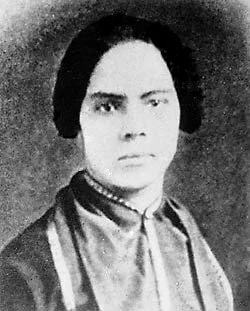
Mary Ann Shadd was born in Wilmington, Delaware in 1823. She was the eldest of the thirteen children of Abraham and Harriett Shadd who wore free African Americans active in abolitionist circles.
The Shadd’s Delaware home was a stop on the Underground Railroad for freedom seekers needing refuge.
The family moved to West Chester, Pennsylvania because Delaware restricted the education of Black children. Shadd and her siblings attended a Quaker school, and she began teaching as a teenager. In addition to teaching in Pennsylvania, Shadd also taught in Delaware, New York, and New Jersey.
At sixteen, she established a school for Black children in Delaware ignoring the laws prohibiting the education of African Americans.
In 1848, Frederick Douglass asked the readers of The North Star, his newspaper for suggestions about improving the lives of African Americans. Shadd’s response was simple, “Do more and talk less.” She was tired of all the talk about freedom and equality being followed by inaction.
After the passage of the Fugitive Slave Act of 1850, Shadd and her brother Isaac moved to southern Ontario, Canada. They continued to assist fugitive slaves and advocated for the establishment of settlements for free Blacks.
In 1851, Shadd opened a school in Winsor, Ontario and another in Chatham, Ontario to educate the children of formerly enslaved families and free Black settlers. In Windsor, the school offered evening instruction for adults in addition to day school for boys and girls. Although most schools in Canada were still racially segregated, Shadd believed integration was the best way to introduce children and families of all races to the concepts of equality and inclusion. Many Blacks opposed her ideas fearing their children would be discriminated against in White schools.
Shadd’s philosophy of education stressed the importance of literacy, economic independence, and discipline. She believed her students should become self-reliant instead of dependent on others by learning practical skills and asserting their political power as a group.
In 1853, Shadd founded an anti-slavery weekly newspaper, the Provincial Freeman. The paper’s motto, “Devoted to antislavery, temperance, and general literature,” expressed its mission. For the publication to be more widely accepted, Shadd convinced prominent Black men in the Ontario area to become her partners and put their names on the masthead until 1854. After replacing their names with her own, the paper lost sponsorship and readership and folded.
At great personal risk, because of bounty hunters and the Fugitive Slave Act, Shadd traveled throughout the Northen United States to advocate for freedom, equality, and racial integration for African Americans through education and self-reliance. In 1855, she applied to attend the Philadelphia Colored Convention, but women had never been included. Her request passed narrowly. Shadd’s speech at the convention was so well received that she was given an additional ten minutes of time. Much of her involvement in the convention was not included in the official record because she was a woman.
The following year, she married Thomas Cary, a Toronto barber who was a fellow abolitionist. They had two children before his death in 1860.
Shadd Cary returned to the United States to help recruit soldiers for the Union Army during the American Civil War.
She attended Howard University Law School and graduated at sixty years old becoming the second Black woman to receive a law degree in the United States.
Shadd Cary wrote for newspapers and in 1880, she organized the Colored Women’s Progressive Franchise, an organization advocating for equal rights for African American women. She joined the National Women Suffrage Association and worked with Susan B. Anthony and Elizabeth Cady Stanton for women’s suffrage. Shadd Cary testified before the Judiciary Committee of the US House of Representatives.
Shadd Cary died of stomach cancer in 1893. Despite her many achievements, she was buried in an unmarked grave at Columbian Harmony Cemetery in Washington D.C. In the late 20th century, her achievements were recognized and her grave was finally marked with her name.
In 1976, Shadd Cary’s former home in Washinton D.C. was declared a national landmark. In 1987, she was designated a Women’s History Month Honoree by the National Women’s History Project. In 1998, she was inducted into the National Women’s Hall of Fame. A post office in Delaware was named The Mary Shadd Cary Post Office in 2021.
In Canada, she was designated a Person of National Historic Significance. At BME Freedom Park, Ontario provincial plaques honor her and her newspaper. In 2009, Canada featured her in their study guide for the Canadian citizenship test. In 2022, Local artist Donna Mayne created a bronze statue of Shadd Cary for The University of Windsor. Members of her family attended the unveiling. Shadd Cary was featured on a Canadian stamp in 2024 as part of Canada’s Black Heritage Month stamp series. The Library and Archives Canada hold the Mary Ann Shadd Cary collection of textual records of her personal and professional correspondence.
On October 9, 2020, Shadd’s 197th birthday was observed with a Google Doodle appearing across Canada, the U.S., Latvia, South Africa, Senegal, Nigeria, Ghana, Tanzania, and Kenya.
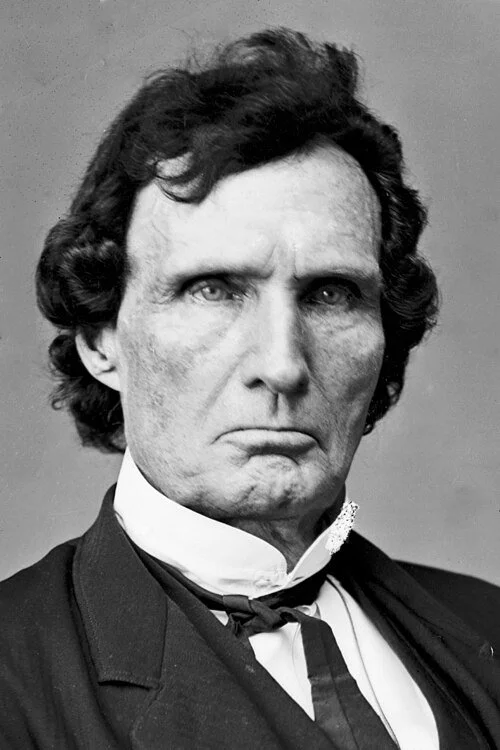
Thaddeus Stevens was born in 1792 in Danville, Vermont. He was the second of four sons born to a poor family. Thaddeus and his elder brother were born with disabilities. Thaddeus had a clubbed foot and a permanent limp. His brother had two clubbed feet. In those days, children born with physical deformities were considered Divine judgment for secret parental sins.
Steven’s father Joshua was a farmer and cobbler. After fathering two sons without disabilities, Joshua abandoned his wife and children with no explanation. His fate is unknown, but Joshua may have died at the Battle of Oswego during the War of 1812.
Sarah Stevens struggled to run the farm and provide for her sons, so she moved her family to Peacham, Vermont.
Stevens was taunted throughout school by his classmates because of his disability. He survived by becoming independent, headstrong, and focusing on his education. After graduation, he attended the University of Vermont until the federal government appropriated campus buildings during the War of 1812. Stevens transferred to Dartmouth during his sophomore year.
After graduation, he returned to Peacham as a teacher. He soon turned his attentions to becoming a lawyer. Steven moved to York, Pennsylvania to join the faculty of York Academy and continue to study for the bar. Local lawyers passed a resolution barring from membership any person who had “followed any other profession while preparing for admission.” It was most likely passed to keep men like Stevens who were not from wealthy elite families from becoming lawyers.
According to Stevens, he solved the problem by arriving at the examining board in Harford County, Maryland with four bottles of Madeira wine. A lot of wine was consumed, few questions were asked, and Stevens left the next morning with a certificate to practice law anywhere because of existing reciprocity agreements.
He opened a law office in Gettysburg, Pennsylvania in 1816. His career advanced slowly, but after unsuccessfully defending a poor farmer who killed a constable trying to evict him, townspeople were so impressed with the defense he mounted, they began to seek out his legal services.
Stevens was known for his wit and use of sarcasm. He was involved in the first ten cases from Adams County to reach the Pennsylvania Supreme Court. He won nine of the ten cases.
The case of Butler v. Delaplaine became a moment of personal reckoning for Stevens. It was the first case involving slavery that he’d encountered, and he ended up on the wrong side of his beliefs. Before the case, Stevens had no strong feelings about slavery. He lived in a free state but hadn’t considered what that distinction meant to enslaved people.
His client was a slave holder being sued by a slave woman who argued that she and her daughters were legally entitled to their freedom after their owner leased them to a man who took them to a free state. He won the case, but afterwards he denounced slavery and started a lifelong antislavery crusade.
His beliefs led him to seek public office. In Gettysburg, he served six one-year terms on the borough council between 1822 and 1831. Stevens invested the profits from his law practice in land and several iron furnaces. His personal beliefs, savvy business practices, and newly acquired wealth, and status earned him enemies who refused to accept him as an equal. After the death of a pregnant black woman in Gettysburg, rumors circulated that Steven was responsible. When a newspaper owned by one of his enemies published a story naming his as a murderer, He sued for liable and won, but his reputations suffered for years.
Stevens was anti-mason. He supported John Quincy Adams and opposed Andrew Jackson who was the darling of the Masonic brotherhood. Fellow Pennsylvanian and future US president, James Buchanan, encouraged Stevens to support the Masons for political gain, but he refused. He strongly disagreed with the politics of the group, especially their rule forbidding “cripples” from becoming members. Having felt the sting of being excluded for much of his life because of his disability, Stevens wouldn’t support any group that discriminated against peoples with disabilities.
After the Ant-mason movement gained momentum it became a political party. Stevens easily won as their candidate for the Pennsylvania General Assembly. He subpoenaed prominent Masons and questioned them about illegal activities; they invoked their 5th Amendment Rights and refused to answer his questions. Steven’s overzealous questioning caused his party to drop the investigation, and he lost his seat in the next election.
Steven advocated for universal education. At the time, no state outside New England offered free public education for all. In Pennsylvania, only Philadelphia provided free public education. In other parts of the state if parents couldn’t afford private tuition they had to declare a pauper’s oath, a statement declaring that they own nothing of value and are completely destitute.
After Gettysburg voted to offer free public education for all, Stevens became the director of schools for the next five years. Tens of thousands of wealthier voters opposed free public education because they didn’t want their taxes raised to support it. A bill to repeal passed the Pennsylvania Senate, but when Stevens addressed the Pennsylvania House of Representatives, he proved that free public education would save Pennsylvanians money. He accused the wealthy of trying to maintain the social hierarchy by keeping poor families uneducated and poor. The repeal was defeated because of Steven’s tenacity.
Stevens next run for political office was costly in terms of money and reputation. As a result, he decided to relocate his practice to Lancaster, Pennsylvania, a larger more affluent city where he could get a fresh start. He became active in the Underground Railroad in Lancaster. He defended individuals accused of being slaves and helped coordinate the movements of enslaved people trying to reach freedom.
At the 1837 Pennsylvania constitutional convention, Stevens fought against the disenfranchisement of African Americans and advocated for a nonracial definition of American citizenship.
A 2003 renovation of his former home found a hidden cistern attached to the main building via a concealed tunnel used by slaves as a hiding place.
Stevens opposed slavery and the expansion of slavery to new states and territories, but oddly, before the outbreak of the American Civil War he didn’t support efforts to end slave states because of state sovereignty. Some historians believe his stance was motivated by his desire to win elections and work for change from within.
Stevens opposed Henry Clay’s Missouri Compromise that allowed for a limited spread of slavery. According to Stevens, “This word, ‘compromise’ when applied to human rights and constitutional rights, I abhor.” He also opposed the piece of legislation in the bill known as The Fugitive Slave Act of 1850 which allowed slave owners and bounty hunters to hunt down former slaves in free states and return them to servitude.
In 1851, Stevens joined the legal team defending 38 Africans Americans and three others in a federal court Philadelphia. The group was accused of treason in connection with the so-called Christiana Riot where a slaveholder attempting to enforce a warrant under the Fugitive Slave Act was killed. The charges against the defendants were ultimately dropped, and Stevens a prominent figure in the Northern Abolition movement.
In 1855, Stevens joined the new Republican party. Other former whigs who opposed slavery such as Abraham Lincoln, William Seward, and Charles Sumner also joined.
Stevens was sworn in as a member of the US Congress in 1859 only days after John Brown was hanged for attacking the federal arsenal at Harper’s Ferry. During a contentious debate about selecting the next Speaker of the House, Mississippi Congressman William Barksdale drew a knife on Stevens, but failed to inflict an injury.
During the 1860 Republican Presidential Convention, Stevens supported Justice McLean but campaigned vigorously for Lincoln after he won the nomination. When Southern States threatened to secede in opposition to Lincoln’s election, Stevens was unyielding in his opposition to attempts to appease southern lawmakers by passing the Crittendon Compromise which would have enshrined slavery as beyond constitutional amendment. The lame duck president James Buchanan refused to act to stop the secession.
Stevens and other republicans who refused to negotiate with Southern secessionists became known as the Radical Republicans. He was appointed chairman of the House Ways and Means Committee. As chairman, he secured passage of an act to confiscate property including slaves from Confederated supporters in 1861. That same year, he introduced a resolution to emancipate all slaves. It was defeated, but slavery was abolished in Washington D.C. and in the territories. President Lincoln favored a more nuanced approach which infuriated Stevens.
Stevens also opposed Lincolns plans to return freed slaves to Africa where they could establish colonies.
During the Battle of Gettysburg, Confederates sought to destroy property owned by Stevens and murder him. He was at one of his forges supervising operations when he was whisked away against his will by workers for his safety.
Stevens pressured Congress to pass a constitutional amendment outlawing slavery because the Emancipation Proclamation could be interpreted as a wartime measure that didn’t apply to all slaves and could be reversed by future administrations. The 13th Amendment passed the Senate but was narrowly defeated in the House. After his reelection in 1864, Lincoln threw his full support behind the amendment and after Steven’s impassioned speech to his fellow congressmen it passed. Stevens lobbied for the inclusion economic justice in the interpretation of the amendment. Urged by Stevens it voted to authorize the Bureau of Refugees, Freedman, and Abandoned Lands with a mandate to establish schools for African Americans and provide not more than forty-acres of confiscated Confederate land to each family of freed slaves.
Stevens worked with Lincoln to finance the war so soldiers could be paid, horses, weapons, ammunition, uniforms, and food could be purchased. The money was vital to allowing the Union to bring a successful conclusion to the war. Stevens also supported unpopular tariffs that did little to help raise funds for the war.
After the war, Stevens argued the South should be treated like a conquered province and not be given back their constitutional rights. Stevens pushed for passage of the Wade-Davis Bill requiring that at least half of prewar voters be required to sign an oath of loyalty for a state to regain readmission to the Union. Lincoln pocket vetoed the measure in favor of a lower number, 10%.
Stevens supported Lincoln’s reelection but wanted Hannibal Hamlin to remain Lincoln’s running mate and Vice President. Andrew Johnson, a War Democrat from Tennessee was selected as the VP candidate instead.
After Lincoln’s assassination, Johnson assumed the presidency and began what he called Presidential Reconstruction. He approved amnesty for many southerners and issued pardons for war criminals. He counteracted the land reform policies of the Freedmen’s Bureau.
Stevens and his fellow Radical Republicans called for universal male suffrage and stood firm on their demands for land reform. He watched as the southern states began to elect former confederate officers and politicians using Whites only voting systems, and he vowed to stop President Johnson from reversing emancipation and creating a new strong southern adversary.
Stevens was past seventy and in failing health, but he remained committed to passing legislation that would secure the freedom promised by the newly ratified Thirteenth Amendment. He proposed and chaired the Committee of Fifteen to investigate conditions in the South. The Committee heard about violence against African Americans and Northern carpetbaggers who were exploiting the conditions in the south for personal gain.
Stevens and John Bingham proposed two amendments to secure equal rights, privileges, and protections for all citizens and explicitly ended all racially discriminatory laws. The measures that would become the 14th Amendment were watered down before they passed. Stevens was crushed.
Johnson refused to reestablish the Freedman’s Bureau citing cost and the possible unconstitutionality of the government seizing people’s land for private use by others.
Congress didn’t have the votes to override Johnson’s veto. It did manage to override his veto of the Civil Rights Act of 1866 granting African Americans citizenship and equality before the law and forbidding any action by a state contrary to these laws.
Stevens also worked to extend rights and protections for Native Americans.
With Steven’s Agreement, James Mitchell Ashley introduced a resolution for a Judicial Inquiry into possible misconduct by President Johnson. The official inquiry found grounds for impeachment, and the House voted 126-47 to impeach the president. Stevens was one of the House impeachment managers elected by the House to present its case against Johnson. He argued for Johnson’s removal for political crimes (Article XI). Even though Stevens arguments proved his case, Johnson was acquitted.
Stevens vowed to keep fighting for impeachment, but his health failed and he died while Johnson was still in office. President Johnson refused to publicly acknowledge Stevens death, but millions of Americans mourned his passing.