


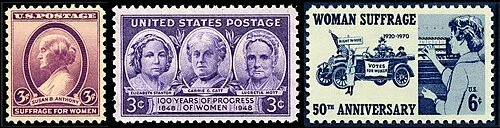
This month’s quiz is about people who worked for women’s suffrage, civil rights, and a more inclusive society. We wanted to dig deeper than the most prominent and more widely known suffragists such as Elizabeth Cady Stanton, Susan B. Anthony, and Emmeline Pankhurst.
We found the names of several men who actively supported women’s suffrage, and even though this is Women’s History Month we’ve included them in this quiz. We also included the predominantly male legislature of a U.S. territory (before it was granted statehood). Expanding justice, equality, and inclusion for every member of society requires us to care about the rights of people who may not look, act, speak, or love like us.
Selecting only twenty-four people and one place was difficult. There are so many unsung heroes of every social movement. We hope this quiz reminds you that ordinary people are capable of extraordinary things when they stand up for the rights of others.
You will use every person’s name in the Word Bank, but only the name of one territory that became a state. Good Luck!
Answers can be found in the last article of this issue, “Next Month in This Awful Awesome Life – March 2026. Keep reading your way through this issue, or you can use this link to jump to the answers,
https://www.thisawfulawesomelife.com/home/2026/3/2/next-month-in-this-awful-awesome-life-april-2026-by-fran-joyce
Word Bank:
New Mexico Hawaii
Arizona Alaska
Wyoming Ethel C. Mackenzie
Jane Addams Alice Paul
Harry T. Burn Dr. Me-lung Ting
Sarah J. Garnet Frances Perkins
Lucy Burns Nellie Bly
Septima Poinsette Clark Robert Purvis
Florence Luscomb Dr. Mary Edwards Walker
Rose Schneiderman Dolores Huerta
Mary Church Terrell Rosika Schwimmer
Victoria Woodhull Lewis Hayden
Ida B. Wells-Barnett Esther Hobart Morris
Carrie Chapman Catt Frederick Douglass
Jeannette Rankin
Questions:
____________________________ was a white suffragist from California. I 1909, she married a Scottish national. Under a 1907 law, the Expatriation Act, women lost their American citizenship if they married non-American men. In 1915, Mackenzie challenged that law.
___________________________fought for women’s rights in the U.S. and the U.K. and worked closely with Alice Paul. She spent more time in prison, where she led hunger strikes and was force fed, than any other American woman suffragist.
_______________________________________was one of the first ten women to graduate from M.I.T. She was an architect who advocated for women’s rights, civil rights, labor, and peace movements during the 20th century.
____________________________ risked her own safety to improve medical care for women, children, and refugees.
___________________________________________ was a Hungarian peace activist, suffragist, and feminist. She was originally denied U.S. citizenship when she refused to sign the citizenship application asking new citizens if they were willing to take up arms to protect the country. Officials labeled her pacifist views as disloyal and a lack of commitment to the U.S. Constitution, Schwimmer’s challenge to their decision went before the SCOTUS in 1929.
_______________________________________ was a union organizer, suffrage campaigner, labor law reformer, and socialist activist After the 1911 Triangle Shirtwaist Fire, she became a prominent voice for women workers in the Women’s Trade Union League in NYC. Working with Eleanor Roosevelt, she also had a major role crafting labor legislation during the New Deal Era.
___________________________, the first Black female principal of a New York City public school, was active in the suffrage movement. She, along with other Black suffragists, believed securing women’s voting rights were critical to establishing justice and equality for Black people.
_____________________________________, a women’s suffrage leader from Ohio, ran for the U.S. presidency in 1872. Her run was symbolic because according to the U.S. Constitution, she would have been too young to be elected.
__________________________________, a journalist at the New York World, was a pioneer in the field of investigative journalism. She went undercover to expose the abuses taking place in insane asylums. She also advocated for women’s rights, suffrage, and championed social justice for working class women.
________________________________________________ was the first woman to serve as Justice of the Peace in the U.S. She was appointed in Wyoming after the previous Justice of the Peace resigned in protest after Wyoming Territory passed a women’s suffrage amendment in December 1869.
______________________________ was a suffragist, social activist, and author. She co-founded Hull House to provide social services to the poor and immigrant population in Chicago, Illinois.
______________________________________ was a suffragist, peace activist, and co-founder of the League of Women Voters.
_______________________________________ was an educator and civil rights activist who worked to register African American voters.
_____________________________________, formerly enslaved, was an abolitionist, suffragist, publisher, and author.
The first act of the newly formed Territorial Legislature of _________________ in 1913 was to grant women the vote.
______________________________ is a labor organizer and the co-founder of the National Farm Worker’s Association. She works to register agricultural workers who are U.S, citizens to vote.
____________________________ was a suffragist, strategist, and activist for women’s rights. Though often physically abused during her participation in suffrage demonstrations, she advocated for nonviolence.
____________________________________ was a suffragist and the first woman elected to the U.S. Congress.
_________________________________ was a physician, women’s suffrage advocate, Civil War veteran, and the only woman to receive the U.S. Medal of Honor.
_____________________________________ was an anti-lynching advocate, suffragist, author, and the founder of the Alpha Suffrage Club in Chicago.
________________________________ was an African American suffragist, anti-lynching advocate, and educator, who worked to help African Americans have greater access to education and job training. After Jim Crow laws were enacted, she launched a campaign to reinstate anti-discrimination laws using tactics such as boycotts, picketing, sit-ins, and lawsuits.
________________________________ was a wealthy southerner. His father was an English immigrant, and his mother was a second generation African American. After attending Amherst College, he moved to Philadelphia and dedicated his life to abolitionism, women’s rights, and helping the African American community.
At twenty-two years old, _________________________ was the youngest member of the Tennessee General Assembly in 1918. He cast the deciding vote to ratify the 19th Amendment to the U.S. Constitution.
As a leader of Boston’s Black community, _______________________ advocated for members of his community by assisting freedom seekers, fighting injustices, and supporting women’s suffrage.
________________________________ was a suffragist; she advocated for worker safety and the creation of child labor laws. She was appointed Secretary of the Department of Labor by President Franklin D. Roosevelt. She became the first woman in the United States to hold a cabinet position.
Sources Used:
https://www.nps.gov/subjects/womenshistory/20-for-2020.htm