



The road to representation for marginalized groups in the United States has been slow and fraught with setbacks.
In honor of our 250 years, let’s examine the fight for diversity, equity, and inclusion.
Which people and events have paved the way for a more just society? Who is threatening to undo hundreds of years of “Good Trouble?”
Historically, Native Nations were considered semi-independent nations. Native Americans generally lived in communities separate from British settlers. After the Revolutionary War, the newly established federal government signed treaties at a government-to-government level. In the 1830’s President Andrew Jackson pushed for the relocation of Native Americans in the South, supposedly for their own protection, as American settlements continued to expand into Native American lands. Despite several treaties, Native Americans were forcibly relocated to the Great Plains area.
As Americans continued to move westward, the 1851 Indian Appropriations Act allocated funds to move western tribes onto reservations. These Reservations were protected and enclosed by the US government supposedly because of the growing encroachment of whites moving westward. This act set the precedent for modern-day Native American reservations.
The Indian Appropriations Act of 1871 ended recognition of independent native nations. The American government considered them "domestic dependent nations" subject to federal law. This 1871 Act preserved the rights and privileges agreed to under certain treaties, including a large degree of tribal sovereignty. Many, but not all, Native American reservations are still independent of state law. The actions of tribal citizens on these reservations are accountable only to tribal courts and federal law.
During the late 19th and mid-20th centuries, Christian missionaries (paid by the American government) established Native American boarding schools, also known as Indian Residential Schools primarily to assimilate Native American children and youth into American culture, while providing a basic American education. The Bureau of Indian Affairs (BIA) founded additional boarding schools based on the assimilation model of the off-reservation Carlisle Indian Industrial School. The children were forbidden from speaking in their native languages, dressing in their native clothing or participating in any Native rituals or celebrations. This robbed many Native Americans of their culture and history.
It seems odd that our Constitution did not extend citizenship to all Native Americans. The Indian Citizenship Act of 1924 granted U.S. citizenship to all Native Americans born in the United States who had not yet obtained it. This allowed Native Americans to vote in state and federal elections, and extended the Fourteenth Amendment protections. However, Native Americans were still denied voting rights by some states for several decades, and Bill of Rights protections only apply to tribal governments mandated by the Indian Civil Rights Act of 1968.
Today, there are 562 Native American tribes in the United States. The largest are Navajo, Cherokee and Sioux. More than 5 million people in the U.S. are Native people. It’s estimated that 78% of Native people do not live on reservations. Preserving Native American culture is a priority for Native Americans. Respecting and making an effort to learn about Native American cultures should be a priority for all Americans.
There are five hundred and seventy-four recognized Native American tribal entities in the United States. Despite treaty agreements, the sovereignty of these federally recognized nations is still legally limited by their definition as wards of the federal government. While the federal government must consult with tribes about many issues, it maintains plenary authority which severely limits the rights of Native American Nations. In return, the federal government is in a position of guardianship making it responsible for the general welfare of Native American Nations, an obligation that has always been severely underfunded and largely ignored. There are also state recognized tribal entities not recognized by the federal governments.
The poverty rate for American Indians and Alaska Natives is estimated to be around 22-24%. In 2024, the poverty rate for the United states was estimated at 10.6% of the population. Compared with the national average, rates for Native Americans are more than double.
American Indians born within the territory claimed by the United States were not considered American citizens until 1924 although they have always been citizens of their own Nations which predate the arrival of any European settlers.
Native American communities experienced disproportionately high rates of COVID-19 mortality because of poverty and overcrowding in many Native American communities and limited access to healthcare and underfunded infrastructure.
The battle to end the enslavement of Africans and African Americans dates back long before the American Civil War. While victory by the Union troops ensured the end of slavery in the United States, equality, equity, and representation for Blacks in America remains an ongoing process.
President John Adams and his wife, Abigail did not own slaves and believed slavery was wrong. Many other prominent figures in American history felt the same way.
In 1860, there were 32 million Americans – an estimated 15 million of those people were women with few legal rights. Four million (13%) were enslaved black people with no legal rights or voice in government. That same year, Abraham Lincoln was elected president of the United States running on an anti-slavery expansion platform. Seven Southern States immediately seceded from the Union. Despite efforts toward a peaceful resolution and the preservation of the Union, tensions remained high.
In late 1862, President Lincoln signed the Emancipation Proclamation which stated, “all enslaved people in the states currently engaged in rebellion against the Union “shall be then, thenceforward, and forever free.” It didn’t free all slaves, and it didn’t give Black people any of the citizenship rights afforded to White people. In 1863, the proclamation was expanded to extend freedom to slaves in Union-held Confederate territories.
On January 31, 1865, Congress passed the 13th Amendment. Section 1 states, “Neither slavery nor involuntary servitude, except as a punishment for a crime whereof the party shall have been duly convicted, shall exist within the United States, or any place subject to their jurisdiction. Section 2 states, “Congress shall have power to enforce this article by appropriate legislation.” It was ratified December 6,1865.
On April 9, 1865, Confederate General Robert E. Lee surrendered at Appomattox Court House to Union General Ulysses Grant officially ending the American Civil War. Five days later, President Abraham Lincoln was assassinated, and Andrew Johnson became president. Johnson, who was from Tennessee, favored allowing the defeated states to reform their governments and didn’t support legislation protecting the rights of freed slaves. After the collapse of the Confederacy, slavery was abolished, and a period of Reconstruction began which was supposed to reunite and rebuild the war-torn country and grant civil rights to all freed slaves.
Southern States immediately began enacting “Black Codes” or “Jim Crow Laws” to limit the rights of freed slaves and prevent them from working or living wherever they wanted. Members of the U.S. Congress came into conflict with each other as legislators from Northern States tried to enact federal laws to protect freed slaves without the support of President Johnson.
In June 1866, Congress passed the 14th Amendment. Section 1 establishes that all persons born or naturalized in the United States and any location subject to its jurisdiction are citizens of the United States and of the state in which they reside. It also prohibits states from depriving any person of life, liberty, or property, without due process of law and it prohibits states from denying any person within its jurisdiction the equal protection of the laws. Section 2 prohibits any person holding civil or military office who has taken part in insurrection or rebellion against the United States from again holding any state or federal office. It further established that the United States was not liable for the debts incurred by the Confederate States during the American Civil War. It was ratified on July 9, 1868.
In 1870, the 15th Amendment prohibiting the denial of voting rights based on race, color, or previous status as a slave was ratified and Hiram Revels from Mississippi became the first African American to be seated in the U.S. Senate. He served one year filling a seat that had been left vacant when Mississippi seceded from the Union.
Also in 1870, Joseph Hayne Rainey from South Carolina became the first African American to be elected to the U.S. House of Representatives.
In 1872 when Victoria Woodhull was nominated by the National Radical Reformers, she became the first women presidential candidate. Woodhull selected Frederick Douglass as her running mate making him the first African American to run for the U.S. vice presidency.
In 1874 Blanche Kelso Bruce, a former slave from Mississippi, became the first African American elected to a full six-year term on the U.S. Senate. He went on to hold several federal positions until his death in 1898.
In 1890, the Mississippi State Legislature approved its new state Constitution effectively disenfranchising most of the state's African American voters. In subsequent years, South Carolina, Louisiana, North Carolina, Alabama, Virginia, Georgia, and Oklahoma, adopted similar measures.
Jeannette Rankin Successfully fought for a woman’s right to vote in Washington state and Montana. In 1911, the measure allowing women to vote in Wahington state passed. She was elected to the U.S. House of Representative in 1916, the first woman in Congress, before women could legally vote in all federal elections.
On August 26, 1920, the 19th Amendment which granted women the right to vote was formally adopted into the U.S. Constitution. It took 144 years from the signing of the Declaration of Independence for women to secure the right to vote in all elections.
Rebecca Lattimer Fulton of Georgia became the first woman to serve in the U.S. Senate when she was appointed on November 21, 1922. Her appointment was purely symbolic, and she only served for 24 hours.
Hattie Wyatt Caraway of Arkansas became the first woman elected to serve in the U.S. Senate on January 12, 1932. Caraway ran to replace her husband in a special election after his death. After completing his term, she became the first woman elected to serve a full six-year term in the U.S. Senate. She was also the first woman to chair a Senate committee.
In 1949, Margaret Chase Smith of Maine became the first woman to serve in both the U.S. House of Representatives and the U.S. Senate To date, 64 women have served in the U.S. Senate and there are currently 26 serving at this time.
Defending the rights of disabled people is seldom given the priority it deserves. During the 1930s the League of the Physically Handicapped staged sit-ins in New York City to protest discriminatory hiring practices during the Great Depression. In 1968, the Architectural Barriers Act was enacted requiring federally funded or leased buildings to be accessible. In 1973, the Rehabilitation Act passed banning disability-based discrimination in federal agencies, federal employment, and programs receiving federal funding. In 1975, the Education for all Handicapped Children Act (renamed IDEA) mandated the right to free, appropriate public education for all children with disabilities, In 1990, the landmark Americans with Disabilities Act was signed into law prohibiting discrimination in employment, public accommodations, transportation, and telecommunications. In 2008, the ADA Amendments Act passed broadening the legal definition of a disability to ensure wider civil rights protections for disabled people.
Currently, executive actions, budget cuts, layoffs, and legislation by the current administration have curtailed disability rights and services including access to Medicaid and the right to free, appropriate public education. Dismantling DEI and accessibility requirements and removing the federal government’s ability to enforce disability civil rights laws hurts this vulnerable community. Attempts to slash services, benefits, and regulations that help keep disabled people in their communities with their loved ones and out of institutions is cruel and unconscionable.
In 1952 Charlotte A. Bass was nominated by the Progressive Party becoming the first African American women to be nominated for the U.S. vice presidency.
In 1960, a young pastor named Andrew Young joined the Southern Christian Leadership Conference. In 1961 he moved to Atlanta, Georgia to help register black voters. Young became a friend and colleague of Dr. Martin Luther King Jr., and he was a strategist and negotiator during the Civil Rights campaigns in Birmingham, St. Augustine, Selma, and Atlanta. Young was jailed for his involvement in the demonstrations in Selma and St. Augustine. After passage of the Voting Rights Act in 1965, Young ran for Congress in 1970 but was defeated. In 1972, he was elected to the U.S. House of Representatives from Georgia and was reelected in 1974 and 1976. As a member of the Congressional Black Caucus, Young became involved in foreign affairs. In 1977, President Carter appointed him to serves as the United States Ambassador to the United Nations. Young later served two terms as the mayor of Atlanta, Georgia.
In 1962, eleven-year-old Elijah Cummings and some friends worked to integrate a segregated swimming pool in South Baltimore. He became involved in student government at Howard University and earned his Juris Doctor at the University of Maryland School of Law. He practiced law for 19 years in Baltimore and served for 14 years in the Maryland House of Delegates. Cummings served as Chairman of the Legislative Black Caucus of Maryland in the Maryland General Assembly. He became the first African American to be named Speaker Pro Tempore. In 1996 he was elected to the U.S. House of Representatives and was reelected for 11 additional terms.
In 1963, John Lewis was one of the “Big Six” leaders who organized the march on Washington. The “Big Six” consisted of Dr. Martin Luther King Jr., Whitney Young, James Farmer, A. Phillip Randolph, Roy Wilkins, and John Lewis. James Farmer believed Dorothy Height, the president of the National Council of Negro Women should have also been recognized for her efforts to end segregation and extend civil rights to people of color. Lewis had several key roles in the civil rights movement of the 1960s helping to end legalized racial segregation in the United States. In 1965 he organized the first of three Selma to Montgomery marches across the Edmund Pettus Bridge. State troopers and police attacked Lewis and other marchers in an incident that became known as Bloody Sunday. Lewis was elected to Congress in 1986 and served 17 terms in the U.S. House of Representatives. He was awarded the Presidential Medal of Freedom in 2011.
The Civil Rights Act of 1964 ended segregation in public places and banned employment discrimination based on race, color, religion, sex, or national origin. It’s considered one of the crowning legislative achievements of the civil rights movement led by Dr. Martin Luther King, Jr. The Civil Rights Act was proposed by President John F. Kennedy but received strong opposition from southern members of Congress. After President Kennedy’s assassination in 1963, his successor President Lyndon Johnson vowed to support passage of the Civil Rights Act which he signed into law in 1964.
In 1965, the Voting Rights Act was passed to overturn efforts by state legislatures to disenfranchise Black voters. It suspended literacy tests, provided for federal oversight of voter registration in some areas, and directed the attorney general of the United States to challenge the use of poll taxes for state and local elections.
The Fair Housing Act of 1968 banned discrimination in the sale, rental, and financing of property.
In 1968, Shirley Chisholm from New York, became the first African American woman elected to the U.S. House of Representatives. In 1972, Chisholm became the first African American from a major political party to run for president. In 1976, she was the first African American to deliver the keynote speech at the Democratic National Convention.
In 1971, the Congressional Black Caucus (CBC) was established to focus the full Constitutional power, statutory authority, and financial resources of the federal government to ensure African Americans and other marginalized communities in the United States receive the same opportunities for success that are afforded all communities.
In 1992, Carol Moseley Braun, from Illinois, became the first African American woman elected to the U.S. Senate.
In 2008, Barack Obama became the first African American to be elected U.S. President. His wife Michelle became the first African American FLOTUS.
In 2020, Kamala Harris was selected to be the vice-presidential running mate of Joe Biden. In 2021 she was inaugurated as the First Black and Asian U.S. vice president and the first woman to be elected vice president. For several hours in 2021, she assumed the duties of president while President Biden underwent a routine medical procedure.
Since the 2008 election, more than 400 anti-voter bills have been introduced in 48 states to erect unnecessary barriers for people to register to vote, vote by mail, or vote in person. These suppression efforts include gerrymandering (redrawing voting district lines to favor one political party or socioeconomic group), strict voter ID laws, restrictions to early voting, mass purges of voter rolls, and systematic disenfranchisement. These measures disproportionately impact people of color, students. the elderly, and people with disabilities. In response to these anti-voter bills, The Freedom to Vote: John Lewis Act was created to streamline the voting process and enable more citizens to register and participate in the electoral process. This act which would restore key parts of the 1965 Voting Rights Act was passed by the U.S. House of Representatives but has not yet passed in the Senate.
States have added nearly 100 restrictive laws since SCOTUS gutted the Voting Rights Act in in Shelby County v. Holder in 2013. The decision removed the requirement that jurisdictions with histories of racial discrimination in voting must obtain federal approval for new voting policies. The majority opinion concluded that discrimination in voting was a thing of the past. Since the decision, at least 29 states have passed 94 restrictive voting laws. Some of these laws have been blocked by the lower courts or repealed, but at one restrictive voting law continues to exist in each of the 29 states.
In response to unsubstantiated and disproved claims of voter fraud in the 2020 election, many states have attempted to enact strict photo ID laws for voting which discriminate against disabled and lower-income individuals without driver’s licenses or passports who may not be able to afford a photo-ID or have access to the facilities where these IDs can be obtained.
Currently, the president has refused to sign a desperately needed bi-partisan housing bill aimed at making housing more affordable until the SAVE America Act is passed. The Save Act is a highly restrictive voter law requiring voters to provide photo ID at the polls in order to vote. To register to vote, Americans would have to provide proof of U.S. citizenship along with photo ID that matches the name on their birth certificate. Real IDs, which require you to provide your birth certificate and marriage license if you changed your surname after marriage along with a utility bill addressed to you proving you live at your address, would not be sufficient. These restrictions would rob millions of Americans of the right register to vote and vote simply because their legal name does not match the name on their birth certificate. It would create substantial hardships for many individuals to provide copies of their birth certificates, marriage licenses, driver’s licenses, and passports. It also seeks to curtail mail-in voting… a safe voting method the president himself uses.
In addition to restricting who can vote, several states have resorted to gerrymandering, redrawing voting districts to choose which voters can vote for which candidates before the voters actually choose them. It’s the deliberate shaping of district boundaries to influence election outcomes. Districts with heavy minority or low-income populations are often carved up and redistricted to become part of several districts with a majority of affluent White voters. Seats will be added or eliminated resulting in changes to the number of representatives in government affecting the power base of local, state, and federal governments.
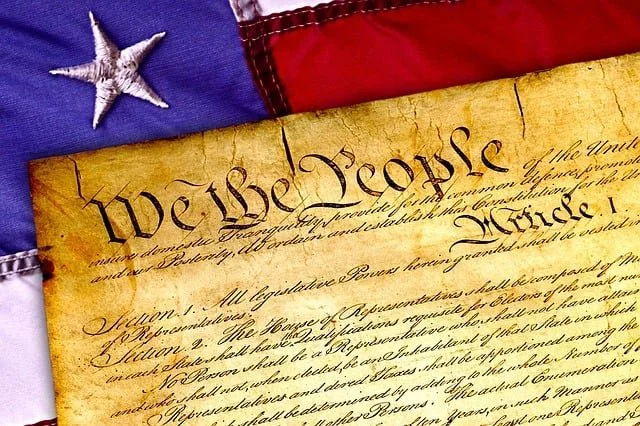
A government that represents the will of its constituents is laid out for us in our Constitution and our ability to create amendments to it to reflect changes in our population and society. We must do everything in our power to use these tools to create a more equitable and just world for future generations.
Sources for this article:
http://www.myblackhistory.net/Politics.htm
https://www.history.com/topics/american-civil-war/emancipation-proclamation
https://www.senate.gov/civics/constitution_item/constitution.htm
https://www.history.com/topics/black-history/civil-rights-act