



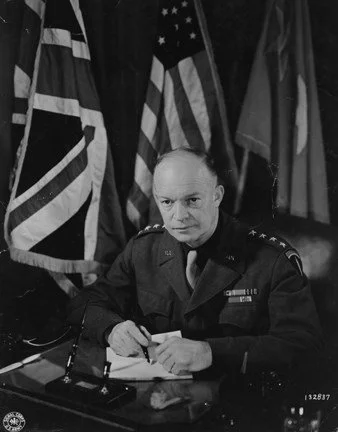
Dwight D. Eisenhower sat alone in a dim, drafty room near Portsmouth as the winds off the English Channel rattled the windows. It was the night of June 5, 1944—the eve of the greatest gamble in modern military history. In a few short hours, he would send 156,000 young men across a storm-tossed sea into the teeth of Hitler’s Atlantic Wall. And though the weight of empires hung upon the decision, no one—not the generals, not the meteorologists, not even the Supreme Commander himself—could say whether the invasion would end in triumph or catastrophe.
So Eisenhower picked up a pen and wrote two letters.
The first was perfunctory—a brief, official communique that would credit “the troops, the airmen, and the Navy” with any success. It mentioned nothing of the man who had made the decision.
The second letter was something else entirely. Folded quietly into his wallet like a soldier carrying his own obituary, it was written for a world in which Normandy had failed—a world in which the beaches ran red, the landings collapsed, and the Allies were hurled back into the sea.
“Our landings in the Cherbourg-Havre area have failed to gain a satisfactory foothold and I have withdrawn the troops. My decision to attack at this time and place was based upon the best information available. The troops, the air and the Navy did all that bravery and devotion to duty could do. If any blame or fault attaches to the attempt it is mine alone.”
There were no excuses. No mention of the violent weather or uncertain tides. There was only responsibility, sharp as a drawn blade and pointed inward.
Most revealing of all, however, was what Eisenhower changed. He first wrote, “This particular operation,” then stopped, reconsidered, and struck the words out. In their place he wrote: “My decision to attack.” And at the end he underlined the final words with thick forceful strokes—“mine alone.”
Eisenhower was not the son of generals or aristocrats. He grew up in Abilene, Kansas, in a family that knew hard winters, long work, and the discipline of getting on with things without complaint. He had never led men in combat before the war. Unlike Patton or Montgomery or MacArthur, there was little theatrical about him. He lacked the swagger of a conquering Caesar. But what he possessed instead was steadiness—the rare ability to hold together men of enormous ego and rival nations with competing ambitions.
And by 1944, the burden resting on his shoulders as Supreme Allied Commander was almost unbearable.
Europe had already spent five years under Nazi domination. France had fallen in six terrible weeks in 1940. Poland had been crushed. The Low Countries overrun. Across the continent flew the black swastika banners of Adolf Hitler’s empire. Millions were already dead. In the East, the Soviet Union bled itself white against the Wehrmacht in battles so vast they seemed almost beyond comprehension. Stalin demanded a second front in Western Europe. Churchill feared a disaster reminiscent of Gallipoli. Roosevelt understood that if the invasion failed, the war might drag on for years.
The Germans knew the invasion was coming. They simply did not know where the hammer would fall.
Along the coast of occupied Europe stretched Hitler’s Atlantic Wall—a sprawling chain of bunkers, mines, gun emplacements, barbed wire, flooded fields, and concrete strongpoints running from Norway to the Bay of Biscay. Rommel, the famed “Desert Fox,” had worked feverishly to turn the beaches of France into a killing ground. He believed that if the Allies established even a small foothold, Germany would eventually lose the war. The invaders had to be destroyed at the waterline.
And so, before dawn on June 6, 1944, the greatest armada in history moved through the darkness.
More than 5,000 ships crossed the Channel beneath low clouds and rough seas. Paratroopers descended into the Norman countryside under moonlight and tracer fire, many landing miles from their targets in flooded fields and hedgerows alive with German patrols. Offshore, battleships unleashed thunder against the coast while young soldiers—many barely out of high school—waited seasick and trembling inside landing craft as machine-gun fire snapped overhead.
Then the ramps dropped.
At Omaha Beach, the sea itself seemed to explode. German bullets tore through the first waves before many men even reached dry sand. Soldiers drowned beneath the weight of their equipment. Others vanished in sprays of blood and surf. Entire units became trapped behind obstacles as mortar shells churned the beach into chaos. Officers died before they could issue orders. The tide rolled red around the dead and dying.
Yet somehow the line did not break.
Men crawled forward yard by yard through smoke and terror. Engineers blew gaps through barbed wire. Rangers scaled the cliffs at Pointe du Hoc beneath murderous fire. Paratroopers gathered in scattered groups and fought in the dark Norman countryside like fragments of a shattered sword slowly reforming itself. By nightfall, against staggering odds, the Allies had secured their foothold.
It was not the end of the war, but the beginning of the end.
From Normandy, the Allied armies burst outward across France. Paris was liberated before summer’s end. The German army, trapped between the Western Allies and the relentless Soviet advance from the East, began to collapse inward upon itself. Less than a year later Hitler would be dead in a bunker beneath Berlin, his thousand-year Reich reduced to smoking rubble after scarcely twelve years.
Eisenhower’s second letter remained folded in his pocket.
Today it resides at the Eisenhower Library, and if you stand before it, you may feel the steel in those black underlined words—the clarity of a man who accepted, unflinchingly, the possibility of ruin. He didn’t hide behind euphemisms like “Mistakes were made” or “Our projections were not met,” nor did he wait for a scapegoat to emerge from some committee. He wrote it plain: “If any blame or fault attaches to the attempt, it is mine alone.”
In our own age—an age of bombast, spin, and carefully distributed blame—it is remarkable to look back on a man prepared to sign history’s possible obituary in his own name.
No buck passed. No euphemisms. No curtain to hide behind.
Just Ike, alone in the dark, accepting the consequences of command.
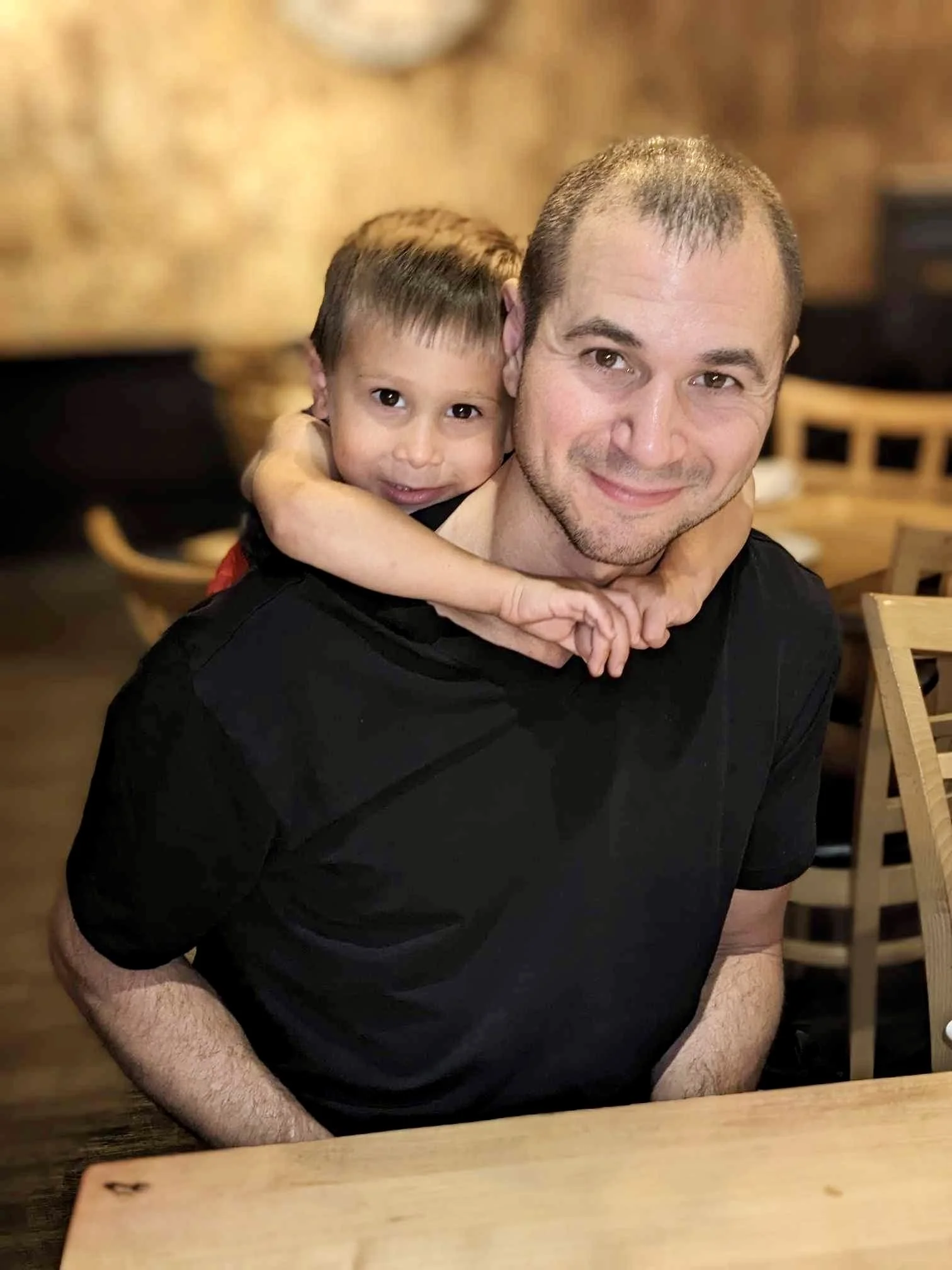
Tony Valerino is an author and independent researcher focused on American history and Western civilization. He has published two books, his most recent a history of the United States told through turning points that shaped the nation’s people and institutions. He also writes daily historical essays and reflections on his blog. Links below.
Pivotal Moments That Shaped America - https://a.co/d/g6qjSrw
Facebook blog - https://www.facebook.com/share/1FNLF42a8K/?mibextid=wwXIfr
Civilizations of the Ancient World - https://a.co/d/e65mKDD