




In a narrow street in Prague, beneath a low winter sky the color of ash, a shopkeeper stands alone behind the window of his small produce store.
The morning is quiet. A few figures move along the street, collars turned up against the cold, their footsteps dull against the pavement. Nothing about the scene suggests danger. There are no soldiers, no shouting crowds, no visible sign of force. Yet everything here is controlled.
Inside the shop, the man reaches beneath the counter and removes a small printed placard. He pauses for a moment, not in defiance, not even in thought, but in habit. Then, with a practiced motion, he places it in the window where it can be seen from the street.
“Workers of the world, unite!”
He does not believe the words. He has never believed them. The slogan has nothing to do with his life, with his work, or with the quiet calculations that govern his days—what can be sold, what must be hidden, what must not be said.
But belief is not required. The sign is not a declaration. It is a signal.
It says: I am obedient.
It says: I will not resist.
It says: I understand the rules.
The people who pass the shop do not stop to read it. They have seen it too often. It has become part of the landscape, as ordinary as the glass, the vegetables, the street itself. The words no longer persuade. They no longer need to. They simply function. They mark the boundary between safety and suspicion, between conformity and consequence. They are one thread in a vast web of gestures, rituals, and silences by which an entire society is held in place.
In such a world, a man is not an individual, not a soul to be reckoned with. He is a unit, a role, a function within the system. What he is does not matter. What he displays does. The system does not ask the shopkeeper to believe. It asks him to participate.
And so he does. Day after day, the sign appears in the window. The lie is repeated without thought. And because it is repeated, the lie endures.
This is how power survives—not only through force, but through the daily consent of ordinary people who have learned, often without realizing it, to live within the lie.
Until one day, someone refuses.
He does not shout. He does not organize. He does not raise a banner or call a meeting. He simply leaves the sign in the drawer. And in that small act, so small it might pass unnoticed, something begins to crack.
The act appears insignificant. It changes nothing—and yet everything.
. . .
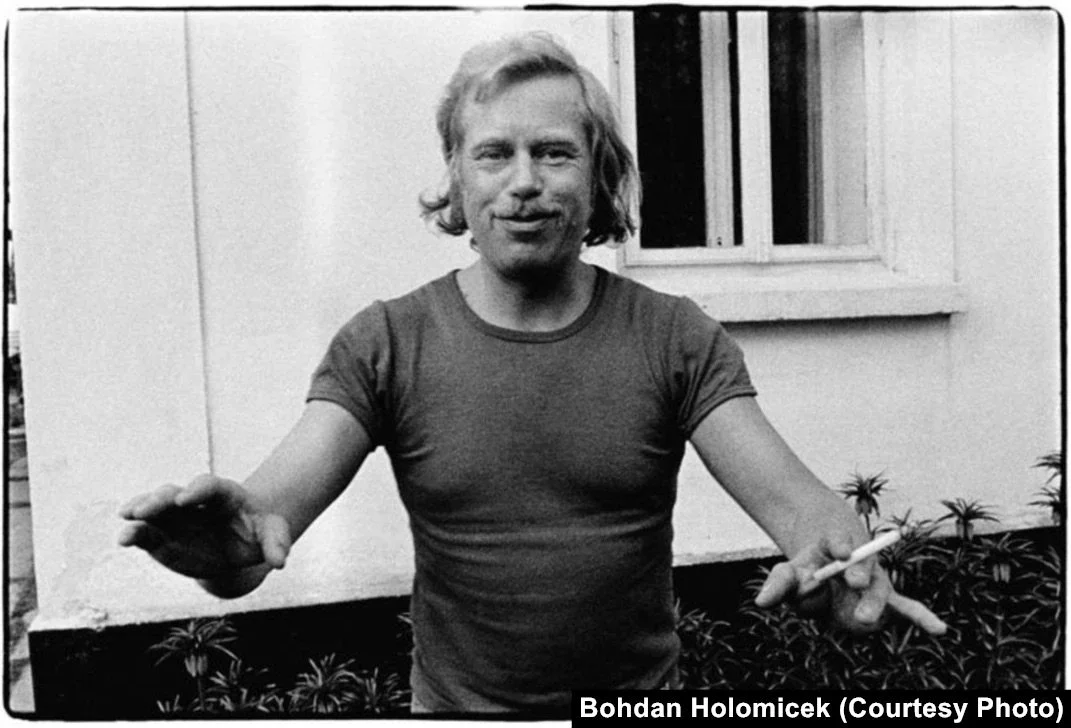
The man who imagined that shopkeeper was not a politician. He was a playwright.
Václav Havel was born in Prague on October 5, 1936, and came of age as his country vanished behind the Iron Curtain, absorbed into a system that claimed to speak for its people while forbidding them to speak for themselves. His plays mocked the hollow, circular language of Communist bureaucracy, and the government answered in kind—banning his work, watching him, interrogating him, eventually imprisoning him.
In 1978, writing underground, Havel composed an essay called The Power of the Powerless. Its central image was the greengrocer and the sign in his window. Through it, Havel made an argument that outlasted the regime he was describing: a lie sometimes survives not by being believed, but by being performed. It becomes ceremony. Habit. A phrase people repeat because everyone else is repeating it too. The government supplies the falsehood; institutions enforce it; ordinary people carry it out, until an entire society is pretending together.
No governments developed this method more completely than the revolutionary socialist and Communist states of the twentieth century. They ruled in the name of workers while banning independent unions. They promised government by the people while permitting only one party. They proclaimed equality while building a privileged class with its own apartments, shops, and hospitals. Elections were held without any real choice in them. Newspapers announced victories that never happened. Store shelves stayed empty while production reports celebrated record harvests.
The lie wasn't a flaw in the system. It was the system.
During Stalin's show trials, seasoned revolutionaries stood before Soviet courts and confessed to conspiracies that existed only on paper—sabotage, treason, espionage dreamed up to fit a verdict already decided. The trials kept the outward shape of justice: prosecutors, witnesses, confessions, sentences. But their real purpose wasn't to convict Stalin's enemies— that could have been done quietly. It was to teach an entire public to distrust what it thought to be true.
A similar dynamic unfolded a generation later in China. Under Mao, local officials competed to report grain harvests that had never been grown, and the state requisitioned food based on numbers that existed nowhere but in propaganda. Tens of millions starved during the Great Leap Forward while official reports kept describing abundance. Under Mao, simply describing reality had become a political risk.
But Communists didn't invent the political lie, and they never held a monopoly on it.
The Nazi state was built on its own mythology—racial purity, national betrayal, a leader incapable of error. In 1944, ahead of a visit from representatives of the International Red Cross and the Danish government, the regime staged a fictional picture of life at Theresienstadt:
buildings freshly painted, public spaces beautified, cultural activities arranged, prisoners forced to perform the appearance of a thriving Jewish community. Behind the stage set stood starvation, overcrowding, and the machinery of deportation.
The vocabulary changes from regime to regime. An abduction becomes a disappearance.
Censorship becomes protection. A purge becomes a correction. But the structure repeats: power invents a picture of reality, then compels its victims to stand inside the frame and hold still.
Free societies are not exempt from this instinct. Governments in democracies also lie about wars, hide misconduct, and shade the truth to protect themselves. The difference isn't that free societies are always led by more honest people. It's that they keep institutions capable of contradicting their own government—a press that can dig up documents, courts that can compel testimony, opposition parties that can investigate, elections that can remove someone from office. None of it works perfectly. All of it can be captured or worn down. But it holds open the possibility that a lie gets found out.
That possibility depends on something no institution can manufacture by itself: a public that still cares whether something is true.
A society doesn't lose that only when soldiers appear in the streets. It loses it in smaller ways first—when people start excusing a falsehood because it protects their side, repeating a claim they haven't checked because it damages the other side, staying quiet when an ally lies because correcting it might hand ammunition to an opponent. Slowly, truth stops being a question of evidence and becomes a question of loyalty—judged not by whether it's accurate, but by who said it and who benefits.
That's the point where the lie stops living in public and starts living in people.
Someone who has to keep saying things he doesn't believe starts to split into two selves:
one for public use, one for private conversation. He learns the choreography—when to applaud, when to go quiet, when not to notice something. At first he knows he's lying. Later he tells himself everyone lies. Eventually the line between honesty and dishonesty starts to feel like something only children still believe in.
At that point, the government doesn't need anyone to believe its version of events anymore. It only needs everyone to believe that no version can be trusted, that every paper has an angle, every official is compromised, every fact is really just an opinion in disguise. A public in that condition can look skeptical, even sophisticated. In practice, it has lost what it needs to resist.
. . .
Havel understood that the greengrocer's refusal would not immediately bring down the government. The police and prisons would remain. The newspapers would print the same slogans the following morning.
But something had changed.
By leaving the sign in the drawer, the shopkeeper had stepped outside the performance. He had stopped allowing the government to use his hands, his window, and his voice against the truth he privately knew.
He had recovered something that a totalitarian government could never safely permit him to possess: the knowledge that his conscience still belonged to him.
Havel became one of the initiators and first spokesmen of Charter 77, which challenged the Communist government to honor the human-rights agreements it had already signed. The regime answered with surveillance, interrogations, arrests, and years of imprisonment.
But then, in 1989, hundreds of thousands of people filled the streets of Prague during the Velvet Revolution. The Berlin Wall had fallen. Hungary had broken free from Moscow. The Communist order that had appeared permanent collapsed with astonishing speed.
Its greatest source of power had disappeared. The people had stopped pretending. Within weeks, the playwright whom the regime had repeatedly imprisoned became president of a free Czechoslovakia.
Yet Havel's greatest legacy was not the office he attained. It was the truth he had recognized while the regime still appeared immovable. Every lying government ultimately makes the same demand. It does not merely ask us to accept the falsehood. It asks us to repeat it, display it, defend it, and condemn those who expose it.
Most of us will never be ordered to place a Communist slogan in our window. But most of us have, at some point, shared a claim we hadn't checked because it damaged someone we already distrusted, or stayed quiet while someone on our side said something we knew to be false, because correcting it felt like a betrayal. Small performances. No placard, no window—just a share, a silence, a nod along. The scale is different. The temptation is not.
The first compromise is usually small. So is the first act of courage. It may be nothing more than refusing to repeat something we know is false. Speaking plainly when silence would be safer. Declining to join the performance simply because everyone else has. Leaving the sign in the drawer.
The act appears insignificant. It changes nothing—and yet everything.
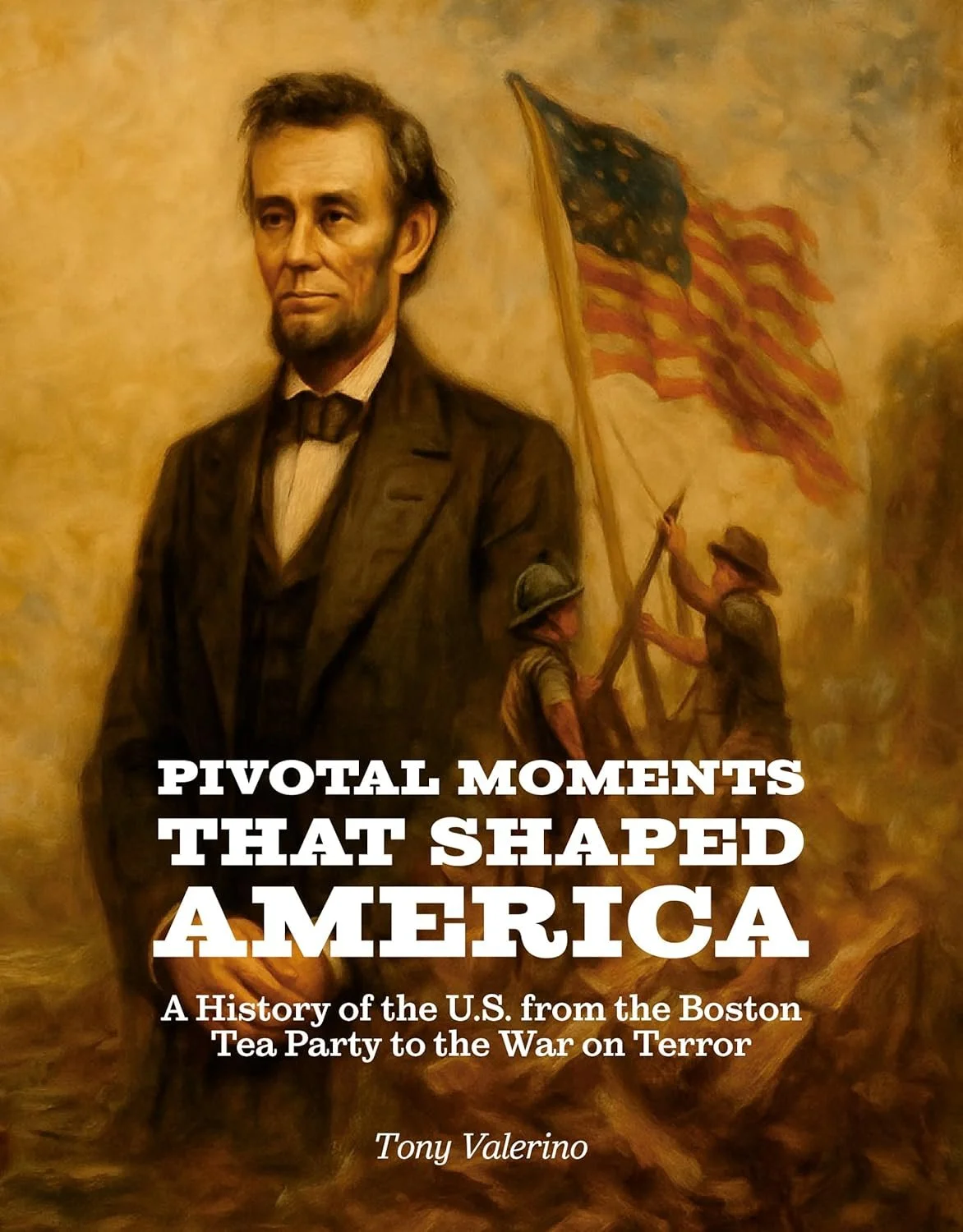
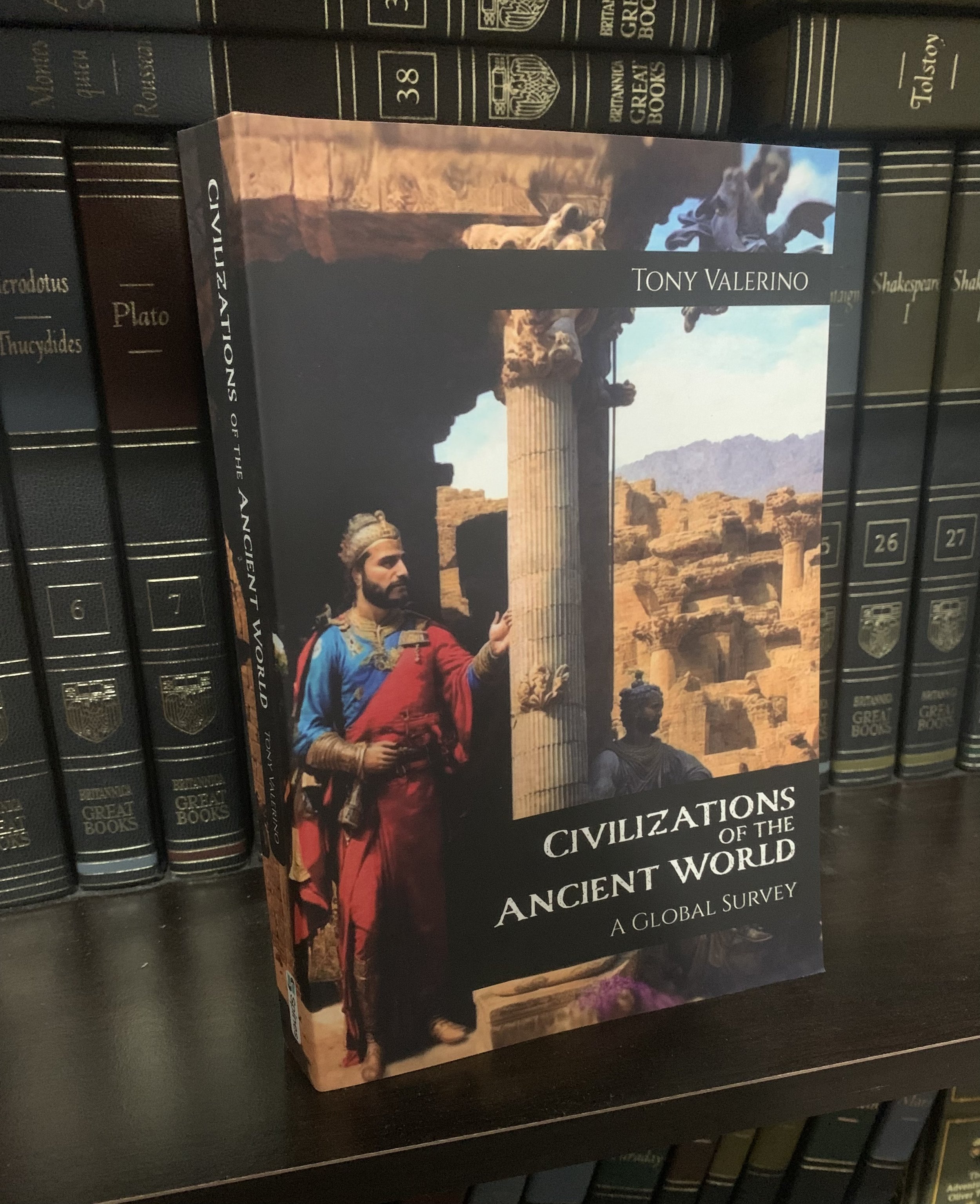
Tony Valerino is an author and independent researcher focused on American history and Western civilization. He has published two books, his most recent a history of the United States told through turning points that shaped the nation’s people and institutions. He also writes daily historical essays and reflections on his blog. Links below.
Pivotal Moments That Shaped America - https://a.co/d/g6qjSrw
Facebook blog - https://www.facebook.com/share/1FNLF42a8K/?mibextid=wwXIfr
Civilizations of the Ancient World - https://a.co/d/e65mKDD